


Graphics, privacy and surface branding
Self-adhesive films and stickers
Select the film according to the surface, visibility, opacity, expected service life and installation conditions. Smooth, clean substrates are essential for reliable adhesion.
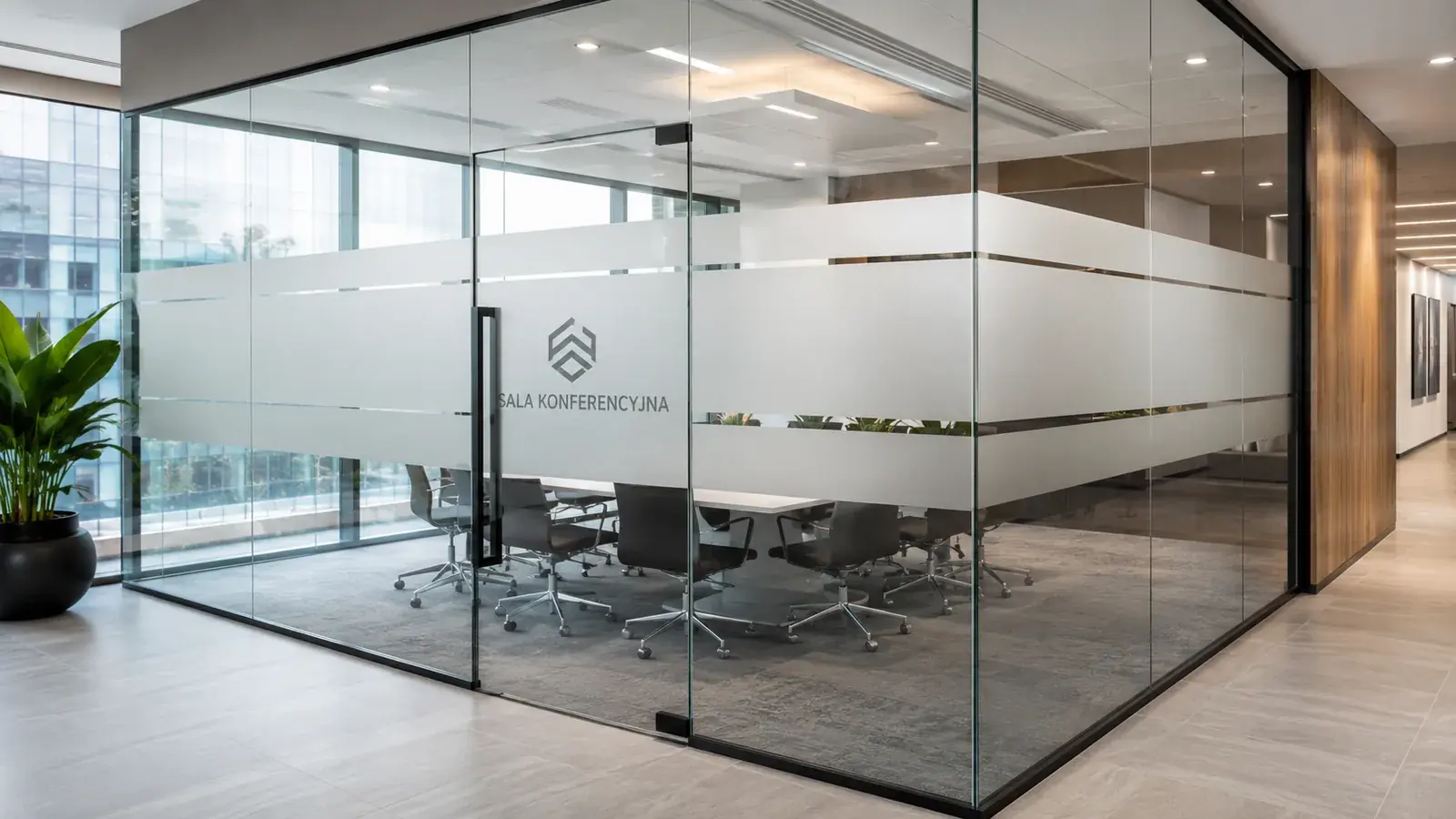
Frosted film
Frosted film is ideal where glass should continue to transmit light but direct visibility needs to be reduced. Common applications include offices, meeting rooms, clinics, restaurants and glazed entrance areas.
Configure →
Transparent film
Use it for logos, opening hours and graphics that need to sit on glass without covering the entire pane with a white rectangle. The final appearance depends strongly on the background and lighting.
Configure →
Black adhesive
Choose it when the background must be hidden reliably — for example when covering an old print, changing brand colours or applying a new graphic over a visually inconsistent surface.
Configure →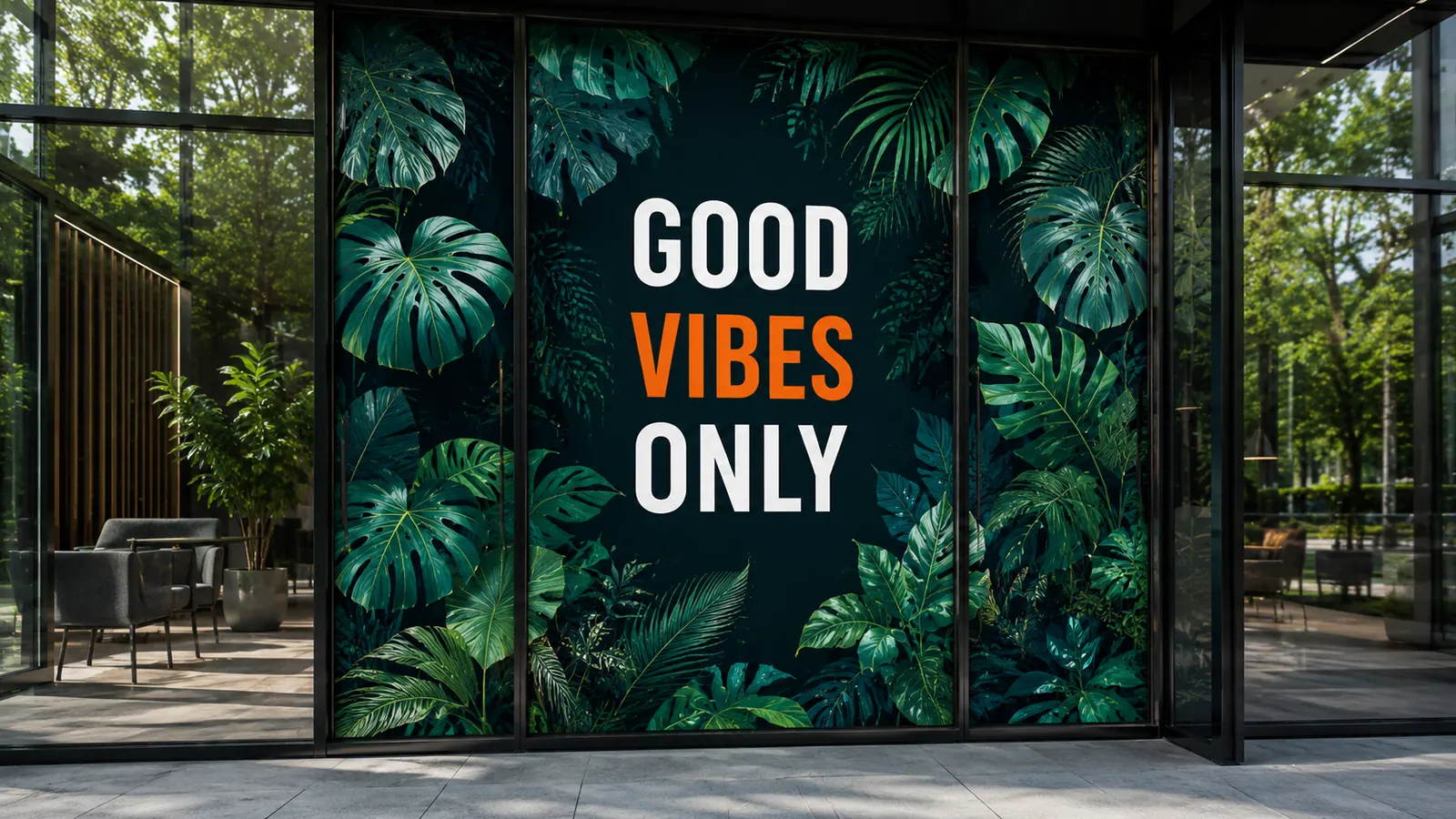
Monomeric vinyl
Use it on flat signs, windows and display panels when price is important and the surface does not require a conformable polymeric or cast film.
Configure →
One Way Vision
The printed areas form the image while the holes allow some view through from the darker side. The one-way effect works best when it is brighter outside than inside.
Configure →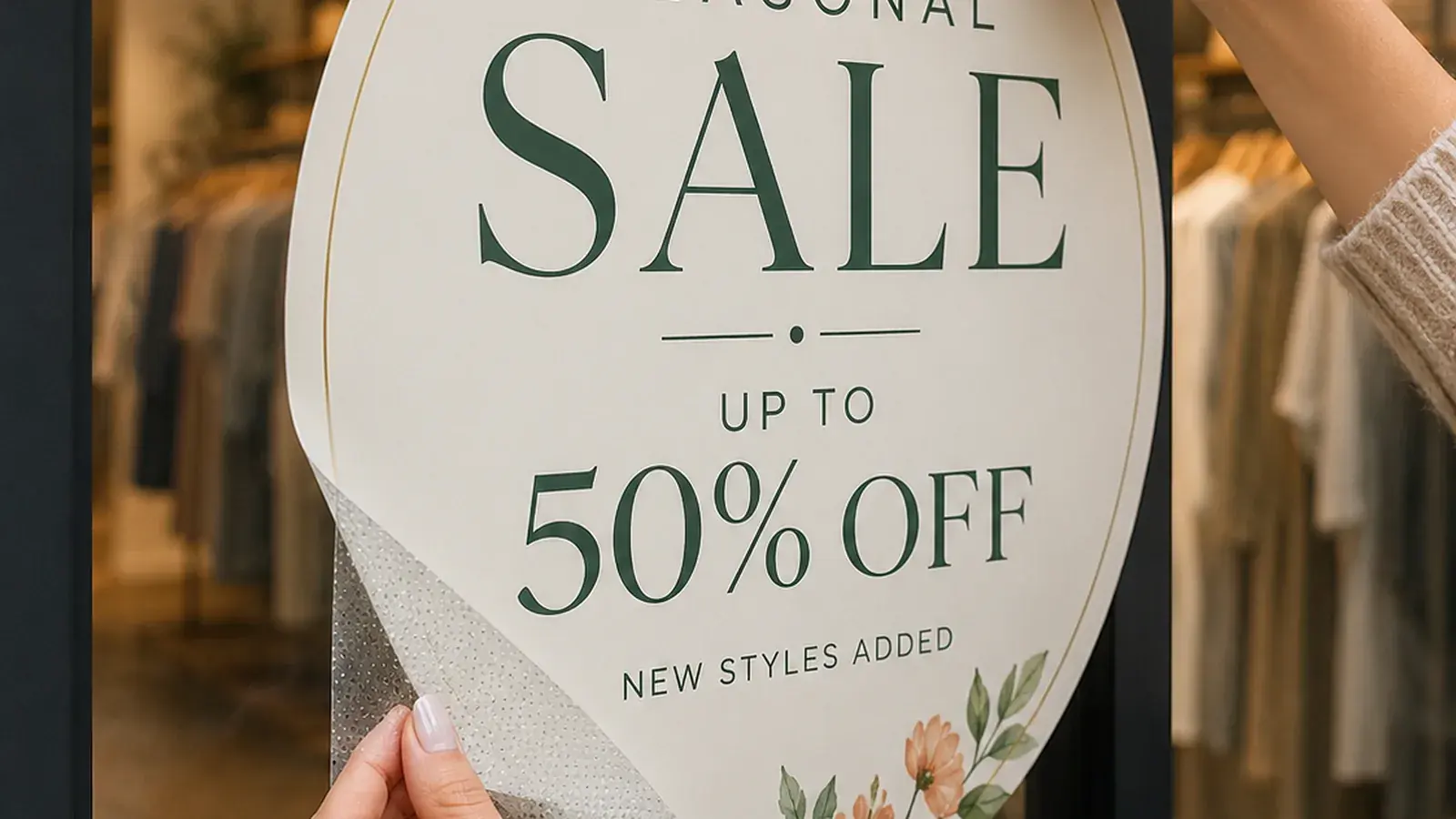
EasyDot film
EasyDot is commonly used on shop windows for SALE messages, new-collection launches, Black Week campaigns, opening announcements and other time-limited promotions. It gives retailers a printed graphic that can cover a selected part of the glass without requiring specialist wet application for every small campaign.
Configure →
Floor stickers
Floor stickers are useful at entrances, near checkouts, beside shelves, on exhibition stands and along circulation routes where information needs to be seen from above.
Configure →Frequently asked questions
Which film should I choose?
Frosted film works on glass, partitions and doors when you want an etched-glass look. Transparent film is good for graphics on glass without a full white background. Choose one-way vision for a shop window when the ad must be visible from outside and a partial view must remain from inside. Black-adhesive film covers a dark surface or an old graphic. Monomeric film suits flat surfaces and simple signs. Floor film needs an anti-slip laminate.
Is film difficult to apply?
It depends on the size, the surface and the type of film. Small stickers on a smooth surface can often be applied yourself. Larger graphics on glass, shop windows or floors need practice. Bubbles, crooked lines and dirt under the film happen easily with large panels, so consider professional installation.
How do I remove film without damaging the surface?
It depends on the film, the adhesive, the surface and how long the film has been on. Gentle heating and slow peeling from a corner usually help. On paint, old glass, boards and delicate surfaces, test first in a hidden spot. Remove adhesive residue with a cleaner suited to the surface.
What is the maximum size?
The maximum width of a single panel depends on the film type and the roll. Larger graphics are split into panels, but the joins must be planned before printing, especially on shop windows, doors and large glazing. Send the final size and a photo of the place, and we will confirm the best split.
Not sure which film to choose?
Describe the surface, the size and the effect you want. We will suggest whether frosted, transparent, one-way vision, monomeric, black-adhesive or floor film fits best.
Ask for advice