Guide
Which Film for Glass to Choose? Comparison of 7 Types
Short answer: OWV gives advertising visible from outside while maintaining view from inside, frosted provides privacy without darkening, transparent looks lightest, while monomeric, black adhesive, EasyDot and floor stickers have narrower, specific applications. The choice depends on what the film should do — not just how it should look.
Published August 1, 2026 · drukwroclaw.pl
Quick pick
- ✓ Advertising on storefront, but want to see outside from inside: OWV
- ✓ Privacy or decoration without blocking light: frosted film
- ✓ Graphics without white background, should look light: transparent film
- ✓ Simple sign, board, seasonal marking on flat surface: monomeric film
- ✓ Need to cover old graphics or dark substrate: film with black adhesive
- ✓ Want to apply and remove yourself without installer: EasyDot
- ✓ Graphics on floor, directional signs, markings in store: floor stickers
Comparison of film types
This overview shows what each film type is for and when not to choose it — OWV, frosted, transparent, monomeric, black adhesive, EasyDot and floor.
OWV Film (One Way Vision)
Perforated film — from outside it works like full advertising surface with print, from inside the venue you still partially see outside. This is a popular choice for storefronts of stores, offices and customer service points, where the glass should work as advertising carrier but inside you don't want to completely block the view or cut off from natural light.
Frosted Film (Frost)
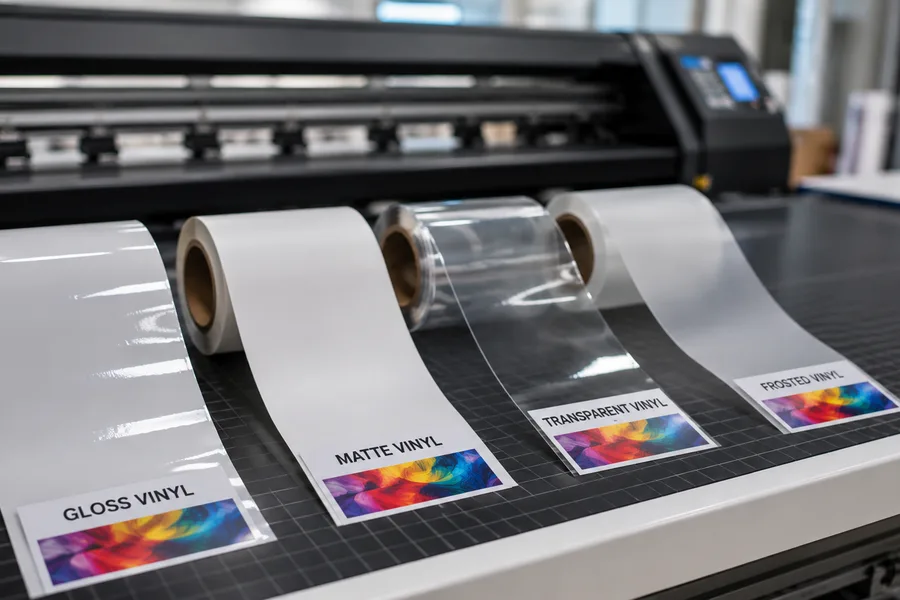
Gives effect of sandblasted, matte glass without interfering with the pane itself. Limits visibility through the glass but doesn't darken the room as full color graphics would. Works on glass doors, office walls, in offices and anywhere where privacy combined with aesthetics matters, e.g. at logo marking or decorative stripes on glazing.
Transparent Film
Transparent film with print — the glass stays glass, and graphics don't have full white background like with normal print. Works well with logo, lettering, opening hours, room markings or subtle decorations where the effect should be light, not visually heavy.
Monomeric Film
Economical variant of self-adhesive film for simple applications: advertising boards, PVC panels, dibond, plexi or simple company markings on flat surfaces. This is a good choice for seasonal campaigns and marking sales points where film for difficult, curved surfaces isn't needed.
Film with Black Adhesive
Solves a specific problem — normal film can let substrate color or old graphics show through. The black adhesive layer improves coverage, which is why this film type is used for rebranding, covering outdated ads or applying to dark boards and storefronts where new print shouldn't "show through" from under the old one.
EasyDot Film
Designed for self-installation without installer — easy to apply and remove, works with seasonal messages like sale, new collection or time-limited promotions. This is a good choice if graphics change several times a year and you don't want to organize a mounting team each time.
Floor Stickers
Film protected with anti-slip laminate, specially prepared for pedestrian traffic — on floors in stores, offices, sales points and events. Works with directional signs, promotional messages and customer information, i.e. where the recipient looks down instead of at eye level.
Common mistakes when choosing film
- • Choosing OWV where full privacy is needed. Perforation by design lets some light and view through — if the goal is to completely cover the interior, frosted film with full coverage or film with black adhesive works better.
- • Using normal self-adhesive film on old, dark graphics. Without black adhesive layer, old advertising can show through new print, especially with lighter colors.
- • Mounting EasyDot on large, precise surface. This film type is designed for simple, self-installation — with large formats and precise positioning, classic film with professional mounting works better.
- • Ignoring substrate when choosing floor film. Floor stickers require appropriate surface preparation and anti-slip laminate — normal wall film isn't designed for that.
FAQ — choosing film for glass
What's the difference between OWV film and frosted film?
OWV is perforated film with print — advertising visible from outside, from inside you still partially see outside. Frosted film gives matte glass effect without advertising print, mainly for privacy and decoration.
Which film best covers old graphics on glass?
Film with black adhesive — additional adhesive layer improves coverage and prevents old color or graphics from showing through new print.
Can EasyDot film be self-removed and reapplied?
Yes, that's its main advantage — it's designed for easy, self-installation and removal without installer, works with seasonal campaigns.
Which film works on floor?
Exclusively floor stickers with anti-slip laminate — remaining film types aren't designed for pedestrian traffic and would quickly get damaged.
Is monomeric film suitable for curved surfaces?
That's not its strength — it's an economical variant for flat surfaces. With curved shapes, film with higher elasticity works better.
Check price of chosen film
Enter dimensions in the calculator of chosen film type and see current cost — broken down into product, preparation and delivery.